 Coverlet
How to build a joyful, low-pressure daily puzzle habit
The best daily ritual is one you can return to freely—and leave freely when the day needs something else.
By Mourad Hamdi · Last reviewed
1. Choose a realistic window
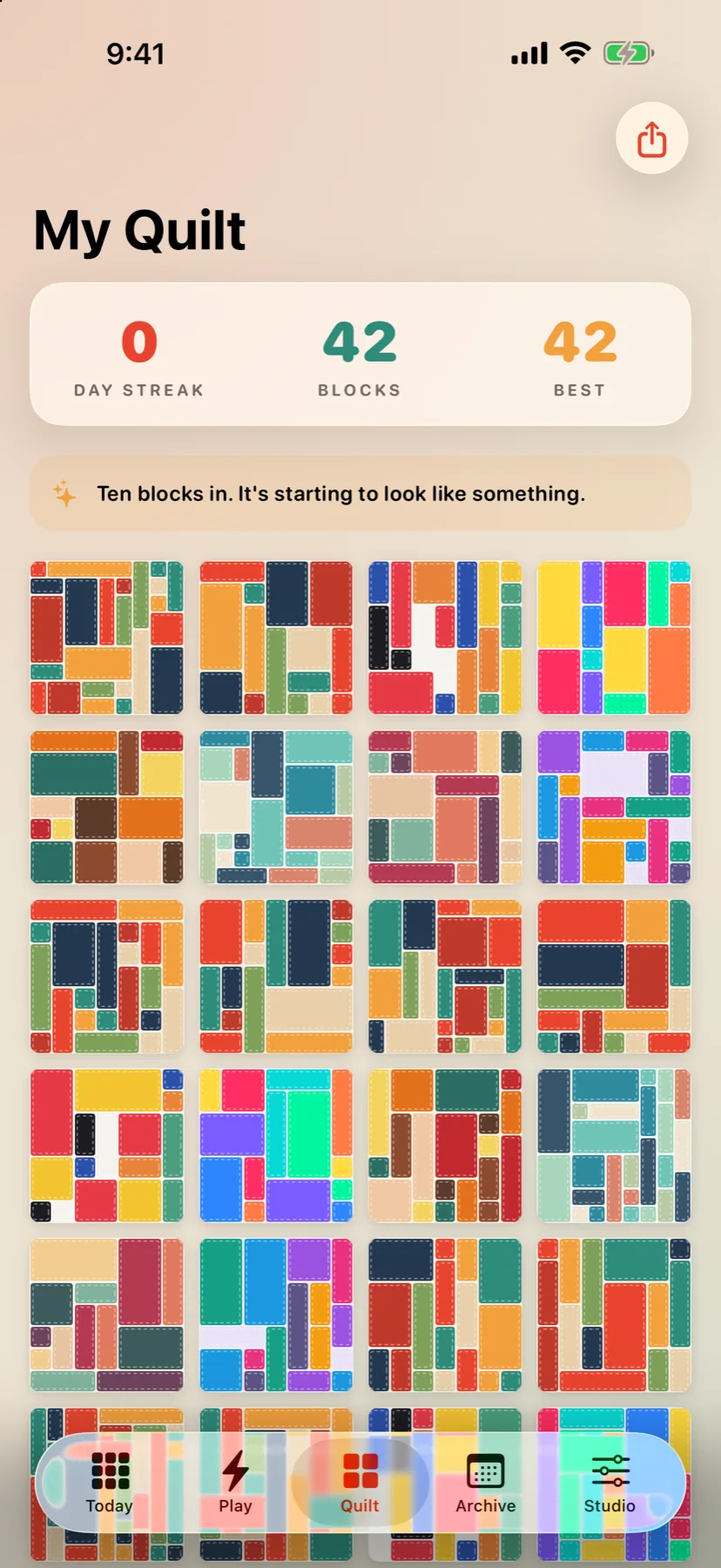
Pick a moment that already exists: the first tea, a train ride, a lunch pause, or the quiet after dinner. A habit becomes gentler when it does not require a heroic amount of willpower. Keep the board small enough that completion is possible, and let a missed day remain a missed day rather than a moral failure. A durable daily ritual usually attaches to a moment that already exists: the first tea, a train ride, a lunch pause, or the quiet after dinner. Choosing a realistic window reduces the need for heroic willpower and makes the activity easier to find without letting it take over the day. Start with a small promise such as one board, ten minutes, or one useful deduction. The promise should be small enough to keep on an ordinary day, not only on an ideal one. If you miss the window, nothing needs to be repaired. A missed day is information about the schedule, not a moral failure. Keep the app easy to reach if that helps, but also keep the exit easy. A habit is meant to support a life that contains work, rest, people, movement, and surprises. Coverlet’s quilt can record completed blocks, but the record should remain a quiet by-product rather than a demand to protect a streak. The first practical rule is simple: make returning possible and stopping acceptable.
2. Protect autonomy and competence
Self-determination theory links well-being with environments that support autonomous motivation, competence, and relatedness (Ryan & Deci, 2000). For a puzzle habit, autonomy means choosing whether to play, which technique to open, and when to stop. Competence means understanding the rule, seeing why a deduction works, and having a way to recover when a candidate fails. Relatedness might mean sharing a finished quilt block or explaining a clue to someone else, even if most sessions are solitary. These needs are not a formula for guaranteed happiness, but they are a useful check on design and routine. Avoid turning a reminder into a demand or using a streak to make a player feel behind. Choose a board that offers a reachable challenge and learn one strategy at a time. If the game feels opaque, read a guide or switch to a calmer technique. A joyful habit is not built by removing all difficulty; it is built by making difficulty understandable and chosen.
3. Start with one clear intention
Before opening Coverlet, name one intention: notice an edge, find a forced rectangle, follow a loop, or simply enjoy ten quiet minutes. This keeps the session anchored in an experience rather than a number. If the intention is complete, you have already succeeded. Before opening Coverlet, name one intention that describes an experience rather than a score. You might want to notice an edge clue, find a forced rectangle, follow a loop, compare two candidate regions, or spend ten quiet minutes away from another screen. This gives the session a small centre of gravity. If you achieve the intention, the session has succeeded even if the board is unfinished. If the board becomes interesting and you want to continue, that is a choice rather than an obligation. An intention can also help you match the technique to the moment. Choose Patchwork for area and partition, Stitchline for continuity, or Sprint only when a clock feels energising. Do not use the intention to grade yourself. It is a way to notice what you are doing and why. A short note afterward—“I found one forced move” or “I needed something slower”—can make the habit more responsive without turning it into another productivity system.
4. Use completion as the end
Research on games and recovery suggests that play can be part of a recovery experience after strain, but the fit depends on the person and the context (Reinecke, 2009). Give your session a natural ending. One finished board can be enough; the quilt can hold the memory without demanding another board immediately. Research on games and recovery suggests that play can be part of a recovery experience after strain, but the fit depends on the person and context (Reinecke, 2009). Giving a session a natural ending helps preserve that fit. One finished board can be enough. The quilt can hold the memory of the solve without asking you to start another immediately. If you are using a puzzle between work and family time, finish with a clear action: lock the phone, stand up, drink water, or return to the next task. If you are playing before sleep, notice whether the screen and the challenge help you wind down or keep you activated. Completion should feel like an option, not a trap. Stop when the planned window ends, when irritation rises, or when another need becomes more important. More play is not automatically better, and a longer session is not proof of a stronger habit. The practical boundary protects the reason you began: a small moment of enjoyment or attention that fits inside the rest of your life.
5. Review the routine kindly
At the end of a week, ask what made play feel good and what made it feel like pressure. Keep the parts that support you. Remove the parts that turn enjoyment into obligation. A positive association between play and well-being in population research does not mean more play is always better (Johannes et al., 2021). At the end of a week, ask what made the ritual feel good and what made it feel like pressure. Keep the parts that support you: a certain time, a particular technique, a shared conversation, or the satisfaction of a completed block. Remove the parts that create obligation: checking a streak, replaying a board after fatigue, or treating a missed day as evidence of weak discipline. Johannes, Vuorre, and Przybylski (2021) found a positive correlation between video-game play and well-being, but correlation does not show that more play is always better or that the same relationship applies to every person and session. Your own response is a boundary condition. If the habit feels restorative, keep it flexible. If it interferes with sleep, responsibilities, relationships, or mood, shorten it or pause it. A joyful routine should be able to change when your life changes. Coverlet can provide a small recurring invitation, but the player remains the authority. The healthiest measure is not an unbroken streak; it is whether the activity continues to feel freely chosen and worth the time.
Write a flexible template
A simple template can make the habit easy to begin without making it rigid: cue, choice, intention, endpoint, reflection. The cue is the moment that already exists. The choice is the technique or board that fits your energy. The intention is one thing you want to notice. The endpoint is a board, a time limit, or the next obligation. The reflection is one sentence about whether the session felt freely chosen. Use the template as a prompt, not a scorecard. If the day changes, change the routine. If you miss a week, restart without trying to compensate. Research can support the idea that autonomy and recovery experiences matter, but it cannot tell you the perfect schedule or promise that more repetition improves well-being. A joyful habit leaves room for other pleasures and responsibilities. The measure is whether the ritual continues to add something small and welcome, not whether it survives unchanged.
For more ideas, read the original daily routine guide and why a small completion can feel satisfying.
References
APA 7 references for the research discussed in this article. Last checked 29 Aug 2026.
- Ryan, R. M., & Deci, E. L. (2000). Self-determination theory and the facilitation of intrinsic motivation, social development, and well-being. American Psychologist, 55(1), 68–78. Source
- Reinecke, L. (2009). Games and recovery: The use of video and computer games to recuperate from stress and strain. Journal of Media Psychology, 21(3), 126–142. Source
- Johannes, N., Vuorre, M., & Przybylski, A. K. (2021). Video game play is positively correlated with well-being. Royal Society Open Science, 8(2), 202049. Source
- Granic, I., Lobel, A., & Engels, R. C. M. E. (2014). The benefits of playing video games. American Psychologist, 69(1), 66–78. Source
Keep reading