 Coverlet
Best offline puzzle games for iPhone and iPad
The best offline games do more than survive airplane mode. They respect attention, explain themselves clearly, and give a finished solve somewhere to live.
By Mourad Hamdi · Last reviewed
Define offline play by the core loop
An offline puzzle game should do more than show a cached landing screen when the signal disappears. The useful test is whether the core loop still works: open the game, understand the board, make deductions, finish the puzzle, and keep the result without a network request. Optional services can be separate. A store purchase, a platform achievement, or a cloud sync feature may need a connection while the puzzle itself remains playable. That distinction keeps the promise precise. Coverlet is designed around daily puzzle generation on the device, so the central activity can fit a flight, train journey, waiting room, or quiet room with unreliable service. The travel guide goes deeper on weak signals and fragmented time. When comparing games, do not accept “offline” as a badge alone. Turn on airplane mode, relaunch, and ask what a player can genuinely finish.
Test the first five minutes
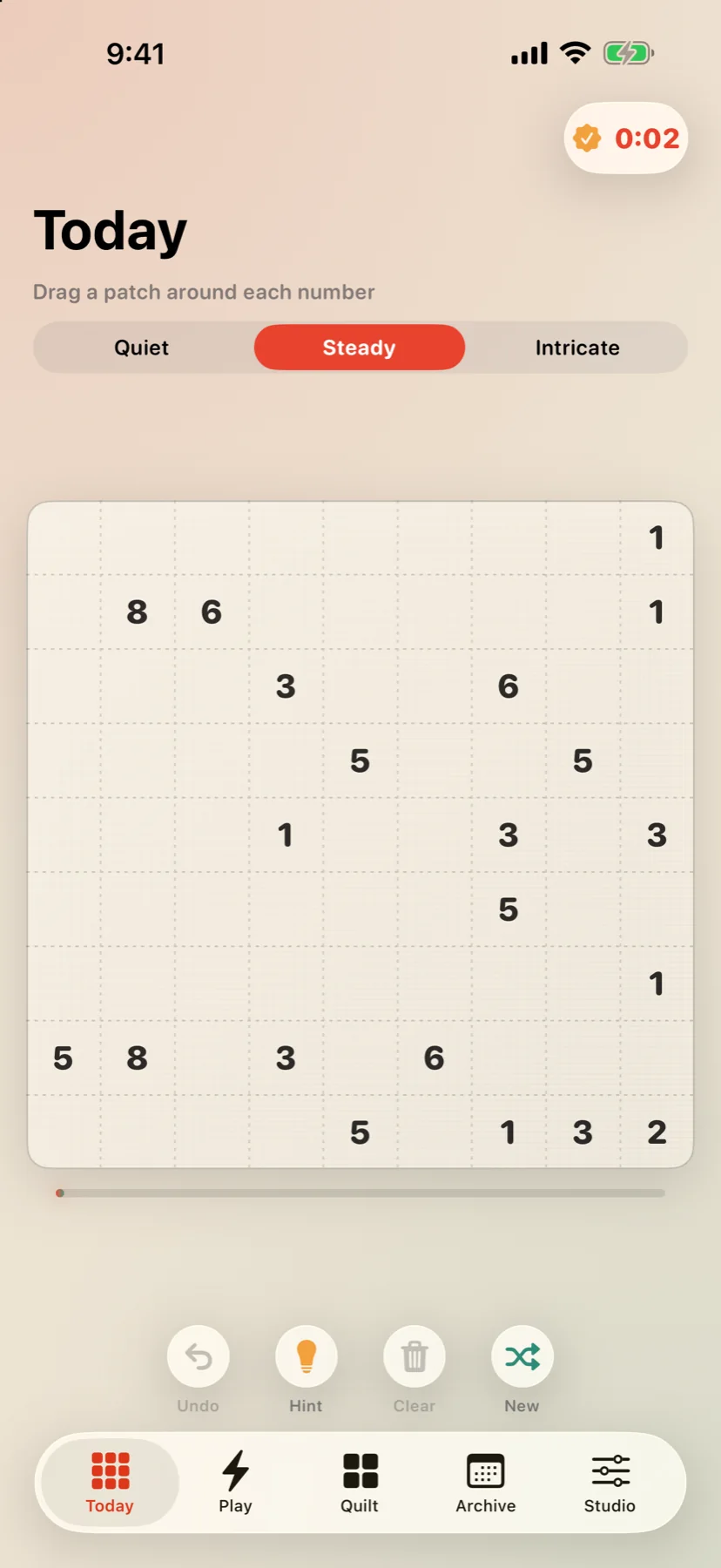
A good offline puzzle should explain itself quickly because travel time is rarely uninterrupted. Start a timer and observe the first five minutes. Can you identify the objective without searching a help centre? Are the clues readable on a small screen? Does a tap have a predictable effect? If you leave the app for an announcement and return later, is the board still understandable? The best games make the state recoverable. A partial solve should not become a mystery, and a mistake should be reversible without a penalty loop. Coverlet’s Patchwork is a useful example of a board with one clear rectangle-area rule; a player can pause after a candidate move and return to the same visible constraints. If you have a longer journey, choose a mode with more depth. If you have a short wait, choose a board whose first deduction is satisfying without requiring a long tutorial. Offline design is partly technical, but it is also the craft of respecting interrupted attention.
Look for readable clues and forgiving touch feedback
Travel conditions are not ideal: a small phone may be held one-handed, glare can reduce contrast, and a train announcement can break concentration. Prioritise puzzle games that separate placed cells from empty cells through more than colour alone, keep numbers large enough to inspect, and make the active state obvious. Touch controls should have forgiving targets and immediate feedback, but they should not make accidental moves difficult to undo. A board that looks beautiful in a screenshot can still be tiring if its clues are faint or its boundaries collapse on a small display. Test portrait and landscape if both are supported, and check the experience with reduced motion enabled if animation is used to explain state. Coverlet’s technique set gives different kinds of readers a choice: area and boundaries in Patchwork, connected regions in Appliqué, or a short burst in Sprint. The right game is the one whose visual language remains clear when your attention is divided.
Match difficulty to the gap you actually have
A five-minute airport queue and a two-hour flight should not demand the same commitment. Look for a game with a range of board sizes, difficulty moods, or time shapes rather than one endless difficulty ladder. A calm mode can make a short break feel complete; a more intricate board can wait until you have room to think. Predictable pacing is especially valuable offline because there may be no connection to fetch a new tutorial or recover a lost state. Coverlet offers Quiet, Steady, and Intricate daily moods, with Sprint as a separate three-minute option. That variety is not a promise that every board will suit every player. It is a way to choose honestly before starting. A good offline game lets you stop at a natural boundary and return later without making the pause feel like failure. Read the certainty-first solving tips if you want a method that makes a board feel manageable even when your available time changes.
Check privacy and lasting value
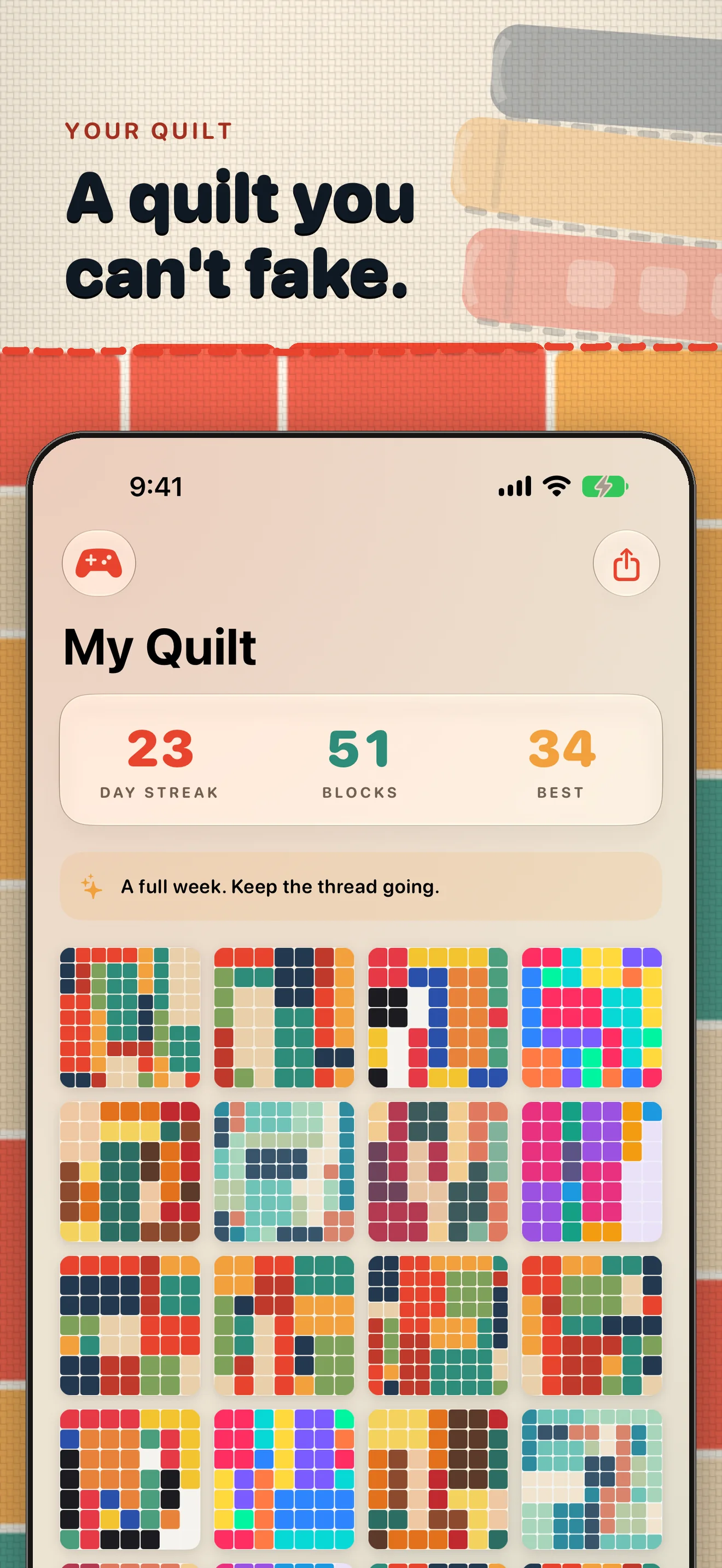
Offline play is also a product-trust question. Ask whether the game needs an account for its core loop, whether advertising or tracking interrupts the board, and what happens to completed work if you stay offline for a week. A good answer is not “nothing ever connects”; it is a clear separation between the puzzle and optional services, with a privacy explanation that matches the actual behaviour. Then look for a reward that lasts beyond the solve. A score that vanishes can be fine for a sprint, but a visual archive can make a travel day feel remembered. Coverlet turns completed boards into blocks in a private quilt, so the reward is a record rather than a demand to keep playing. Compare that design with why the quilt exists, then use the download page to choose the official route to the app. The best offline puzzle is the one that remains useful when the network, the notification stream, and your attention are all limited.
Compare before you commit to a download
Before installing several games for a trip, make a small comparison table for yourself: does the core board work in airplane mode, can you pause and resume, are the touch targets comfortable, and is the difficulty honest about the time it needs? Then check the product’s privacy and support pages rather than relying on a store subtitle. This exercise often removes attractive but unsuitable choices quickly. A game with beautiful art may be a poor travel companion if it cannot open without a connection; a technically offline game may still be tiring if every board is long or visually dense. Coverlet’s support page and Privacy policy are part of that evaluation, not paperwork to ignore. The best recommendation is the one you can explain in practical terms: what works locally, what needs a network, how long a board takes, and what remains after you finish.
Use this checklist before your next journey, then read the travel guide for a shorter offline-play summary.
Keep reading