 Coverlet
Brain training, transfer, and the limits of a clever game
The most trustworthy way to talk about cognitive games is to name both the improvement and the distance between a trained task and real life.
By Mourad Hamdi · Last reviewed
Why brain-training claims are tempting
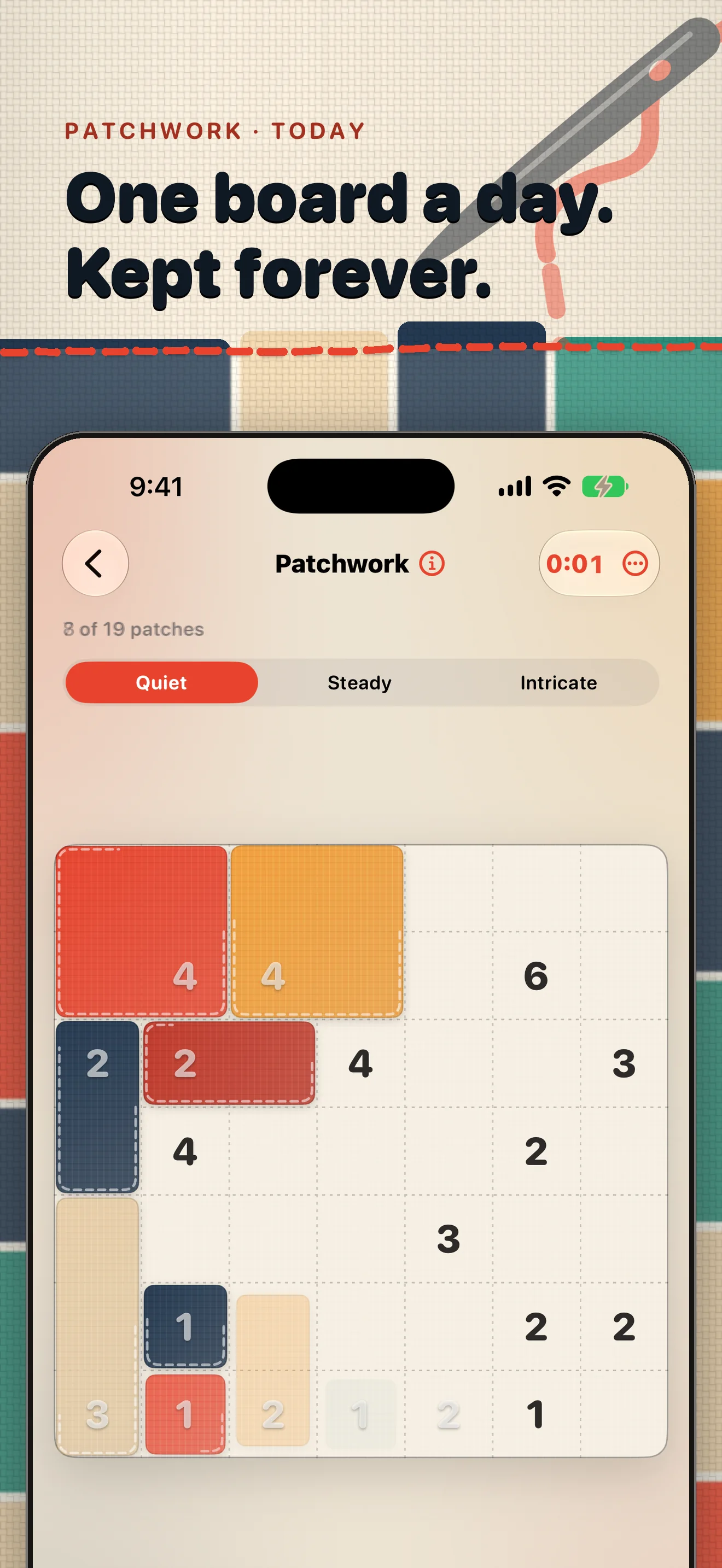
A puzzle seems to offer a reassuring chain: practise attention, become more attentive; practise memory, become sharper; solve a difficult board, become better at reasoning. Sometimes practice does improve performance, but the brain is not a single scoreboard and “better” can mean different things. Improvement may reflect familiarity with the exact interface, a learned strategy, motivation, increased confidence, or transfer to a similar task. Those explanations should not be collapsed into a claim about general intelligence. Marketing language often jumps from a narrow result to a broad promise because broad promises are easy to remember. Research language has to do the opposite: define the task, name the comparison, describe the measured outcome, and state what was not tested. For Coverlet, an honest starting point is that a player may become more familiar with the constraints inside a Coverlet board. The app can be absorbing and satisfying without needing to call itself brain training. Its value can be leisure, agency, curiosity, and practice with a particular kind of logic.
Near transfer is the stronger claim
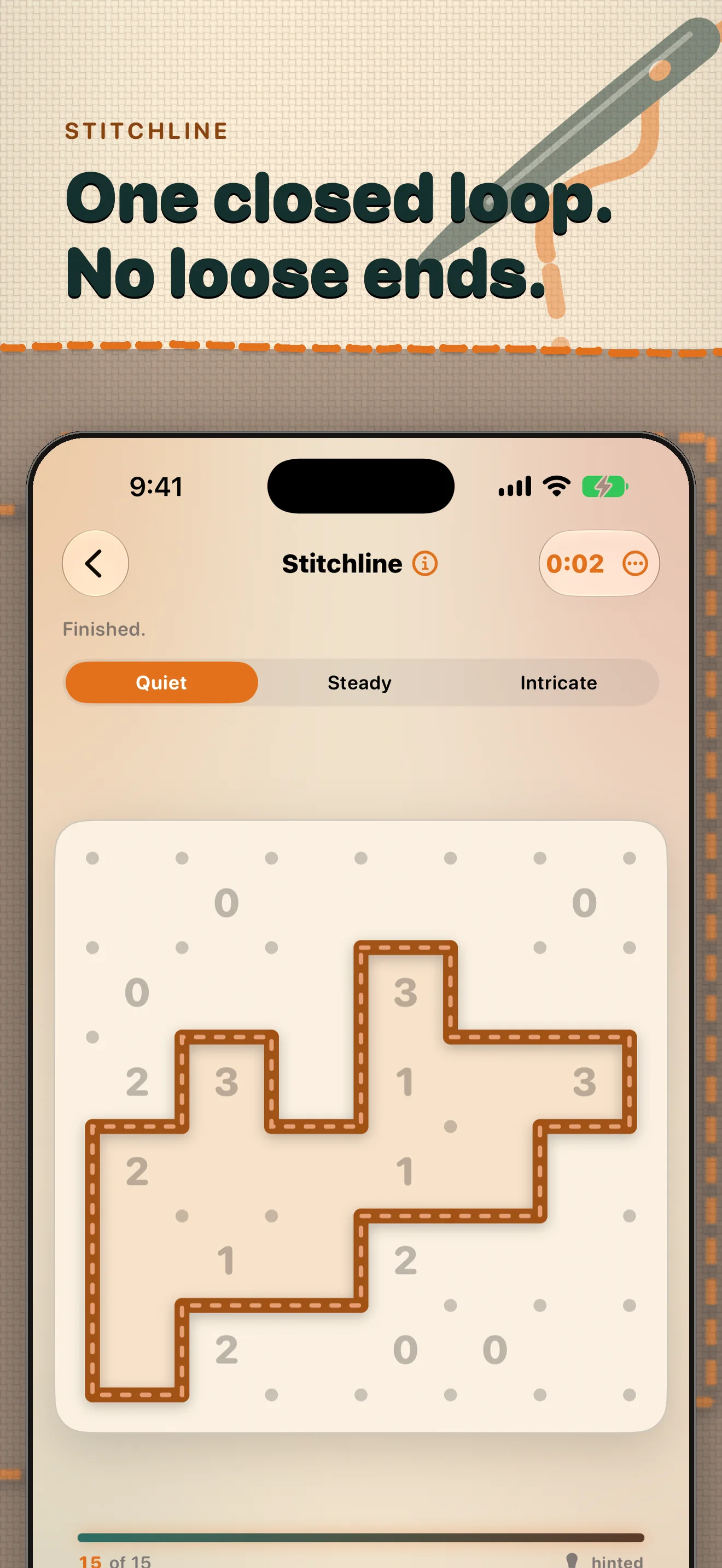
Oei and Patterson (2013) found that different game groups improved different cognitive tasks, with benefits often linked to processes the games repeatedly demanded. That pattern is compatible with near transfer. It is much less support for saying that an enjoyable puzzle automatically improves every form of reasoning a person may need outside the game. Near transfer refers to improvement on a task that resembles the practiced task; far transfer refers to improvement on a more distant ability or an everyday outcome. Oei and Patterson (2013) found that different video-game groups improved different cognitive tasks, with benefits often connected to the processes those games repeatedly required. That pattern is compatible with near transfer. It is much weaker support for saying that an enjoyable puzzle automatically improves every form of reasoning a person may need outside the game. Powers and colleagues (2013) reached a similarly cautious conclusion in a meta-analysis: effects varied by domain, comparison, and study design. A player may learn to inspect clue factor pairs, hold a candidate shape in mind, or recognize a loop contradiction more efficiently because they have practised those operations. That does not establish better memory for appointments, improved school performance, or protection from disease. The distance between practice and outcome is not a technical footnote; it is the central limitation.
What randomized trials can show
Nouchi and colleagues (2012) reported short-term improvements in executive functions and processing speed after a randomized training study in older adults, while also noting uncertainty about long-term effects and everyday relevance. Anguera and colleagues (2013) found durable benefits after a custom multitasking game for older adults. Those studies are valuable precisely because they tested specific interventions, doses, participants, and outcomes—not because they make every game equivalent. Randomized studies are useful because they assign an intervention and compare outcomes under defined conditions. Nouchi and colleagues (2012) reported short-term improvements in executive functions and processing speed after a brain-training intervention in older adults, while noting uncertainty about long-term effects and everyday relevance. Anguera and colleagues (2013) studied a custom multitasking game and found cognitive-control benefits that persisted for six months. These are meaningful findings, but they are findings about specific interventions, participants, training schedules, and outcome measures. They do not make every puzzle equivalent to the tested program. A systematic review of games for well-being and cognitive or emotional training also emphasizes variation in methods and outcomes (Pallavicini et al., 2018). The right question is not whether research supports games in the abstract. It is whether the exact game, dose, comparison, and outcome match the claim being made. Coverlet has not been tested in these trials, so borrowing their results as product evidence would overstate what is known.
Where Coverlet fits
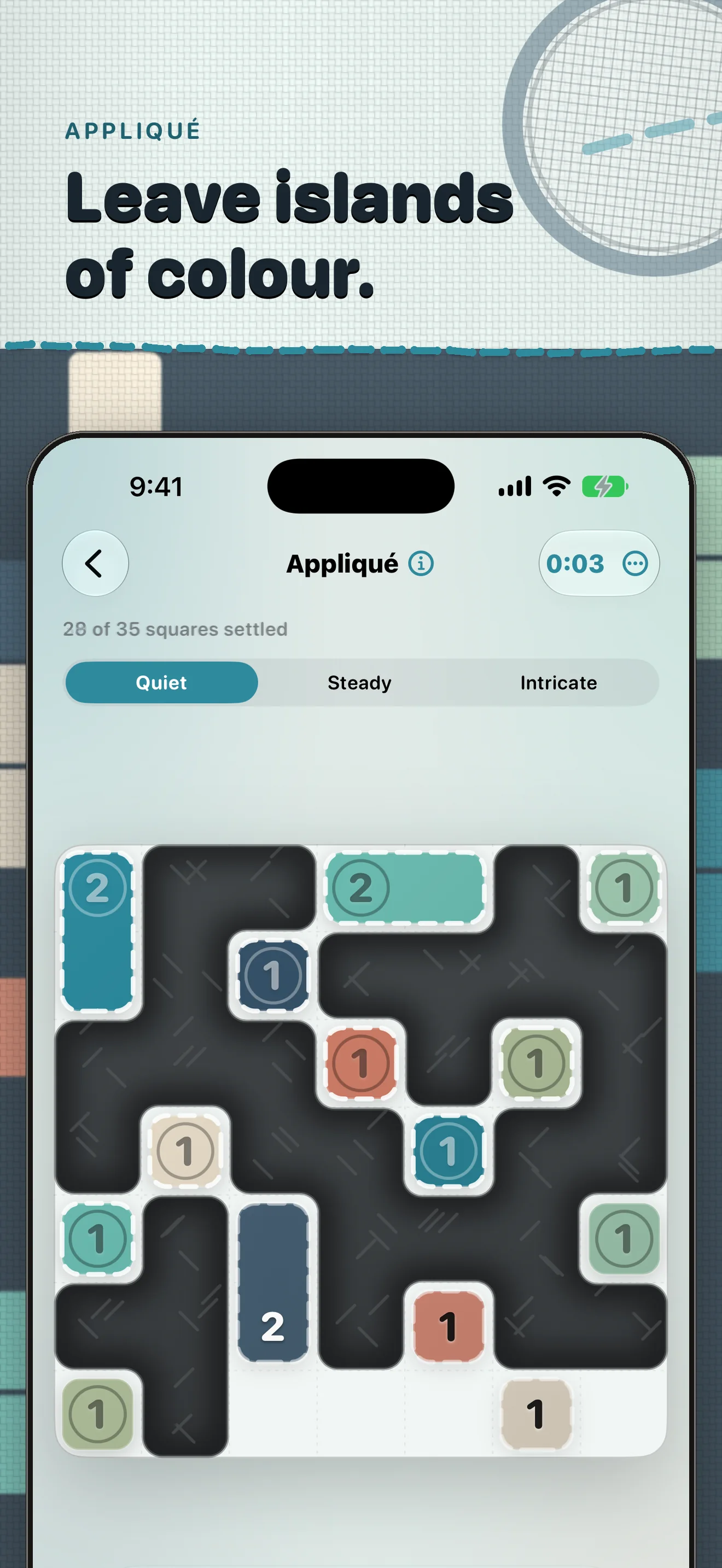
Coverlet is a private entertainment app built for daily logic play, not a cognitive-training prescription. Its value can be enjoyment, curiosity, agency, and a satisfying challenge. It may give you practice with the constraints inside its own boards, but it has not been tested in the cited trials, and the site should not imply that it prevents disease or replaces care. Coverlet is a private entertainment app for daily rectangle logic play, not a cognitive-training prescription. Its boards may ask players to compare areas, track connections, inspect patterns, and revise a candidate after new information appears. Those are legitimate descriptions of play. They are not evidence that the app prevents dementia, repairs attention, raises general intelligence, or replaces professional care. A responsible product page can say that the game offers a clear challenge, adjustable modes, a finished visual record, and a quiet reason to return. It can invite curiosity about how the player thinks. It should avoid language that turns a hobby into a health intervention or makes a player responsible for proving cognitive worth through completion. The same boundary protects the player and the research. If a user is concerned about memory, attention, mood, or daily functioning, a clinician is the appropriate source of assessment. A game can be worthwhile even when the strongest claim it can support is simply that the player enjoys solving it.
Ask a better question
Instead of asking whether a puzzle makes you smarter, ask what kind of thinking you enjoy practising. Do you like comparing shapes, identifying a forced move, maintaining a single path, spotting rotation, or explaining why an alternative fails? A specific question can guide a specific choice: select a board that matches the desired challenge, solve long enough to notice one strategy, and stop when the session no longer feels useful or enjoyable. Keep a small note of what you actually observed rather than treating a mood change as proof of a cognitive effect. This approach respects uncertainty while preserving the fun. If the puzzle helps you create a pause, enjoy a sense of completion, or share a problem with someone else, those experiences do not need to be disguised as brain improvement. The strongest guidance is therefore practical: practise what you mean to practise, measure only what you can observe, and treat transfer as an empirical question rather than a promise. Coverlet can be a clever game without pretending to be a medical tool.
Use evidence as a boundary
Research is not only a source of exciting findings; it is also a boundary around what can responsibly be said. When a study concerns a custom intervention, do not silently substitute a different app. When an outcome is a laboratory measure, do not relabel it as a change in everyday intelligence. When a result is short term, do not imply permanence. Readers can apply the same discipline to their own expectations. Choose a puzzle because you enjoy its rules, because it gives you a pause, or because you like seeing a complex constraint resolve. If you are curious about a specific ability, describe that ability narrowly and look for evidence that measures it directly. If a health concern is driving the search, consult a qualified professional. Coverlet can be a meaningful leisure experience while remaining modest about transfer. That modesty is not a weakness in the product story; it is what makes the story trustworthy.
For a puzzle-first introduction, begin with the Shikaku rules and keep the well-being evidence guide nearby.
References
APA 7 references for the research discussed in this article. Last checked 29 Aug 2026.
- Oei, A. C., & Patterson, M. D. (2013). Enhancing cognition with video games: A multiple game training study. PLoS ONE, 8(3), e58546. Source
- Nouchi, R., Taki, Y., Takeuchi, H., Hashizume, H., Akitsuki, Y., Shigemune, Y., Sekiguchi, A., Kotozaki, Y., Tsukiura, T., Yomogida, Y., & Kawashima, R. (2012). Brain training game improves executive functions and processing speed in the elderly: A randomized controlled trial. PLoS ONE, 7(1), e29676. Source
- Anguera, J. A., Boccanfuso, J., Rintoul, J. L., Al-Hashimi, O., Faraji, F., Janowich, J., Kong, E., Larraburo, Y., Rolle, C., Johnston, E., & Gazzaley, A. (2013). Video game training enhances cognitive control in older adults. Nature, 501(7465), 97–101. Source
- Pallavicini, F., Ferrari, A., & Mantovani, F. (2018). Video games for well-being: A systematic review on the application of computer games for cognitive and emotional training in the adult population. Frontiers in Psychology, 9, 2127. Source
- Powers, K. L., Brooks, P. J., Aldrich, N. J., Palladino, M. A., & Alfieri, L. (2013). Effects of video-game play on information processing: A meta-analytic investigation. Psychonomic Bulletin & Review, 20(6), 1055–1079. Source
Keep reading