 Coverlet
How puzzle games can support recovery after a stressful day
A puzzle cannot solve a hard day. It can sometimes give your attention a small, chosen place to land before the evening begins.
By Mourad Hamdi · Last reviewed
Recovery is a small question, not a medical promise
After a difficult day, people often want a change of mental context rather than another task to complete. In that everyday sense, recovery can mean feeling less depleted, less keyed up, or more able to choose what comes next. That is different from treating anxiety, depression, trauma, chronic stress, or burnout. A puzzle app cannot diagnose a problem, resolve a harmful situation, or replace rest, relationships, medical care, or practical support. It is more responsible to ask a narrow question: might a chosen game help some people move from one kind of demand into a calmer or more absorbing activity? The answer will depend on the person, the game, the timing, and what the session is being asked to do. A puzzle can be a pleasant transition without becoming a prescription. If stress is persistent, interferes with sleep or daily functioning, or feels unsafe, seek qualified support rather than trying to manage it through play alone.
What recovery research can and cannot tell us
Reinecke (2009) examined how people described using video and computer games to recuperate from stress and strain. The study is useful because it treats play as part of a broader recovery experience, but its observational design cannot prove that playing caused recovery. People choose games for reasons that may already be related to mood, time, social context, or access to other forms of rest. Reviews of games and emotion regulation likewise describe possible benefits alongside substantial variation in genre, goal, intensity, and player response (Villani et al., 2018; Pallavicini et al., 2018). A game that helps one person detach from work may leave another person more stimulated or frustrated. The evidence therefore supports conditional language: games can be one possible recovery activity for some people in some contexts. It does not support a universal claim that puzzles reduce stress, improve mental health, or work better than sleep, movement, conversation, or quiet.
Why a bounded puzzle may fit a transition
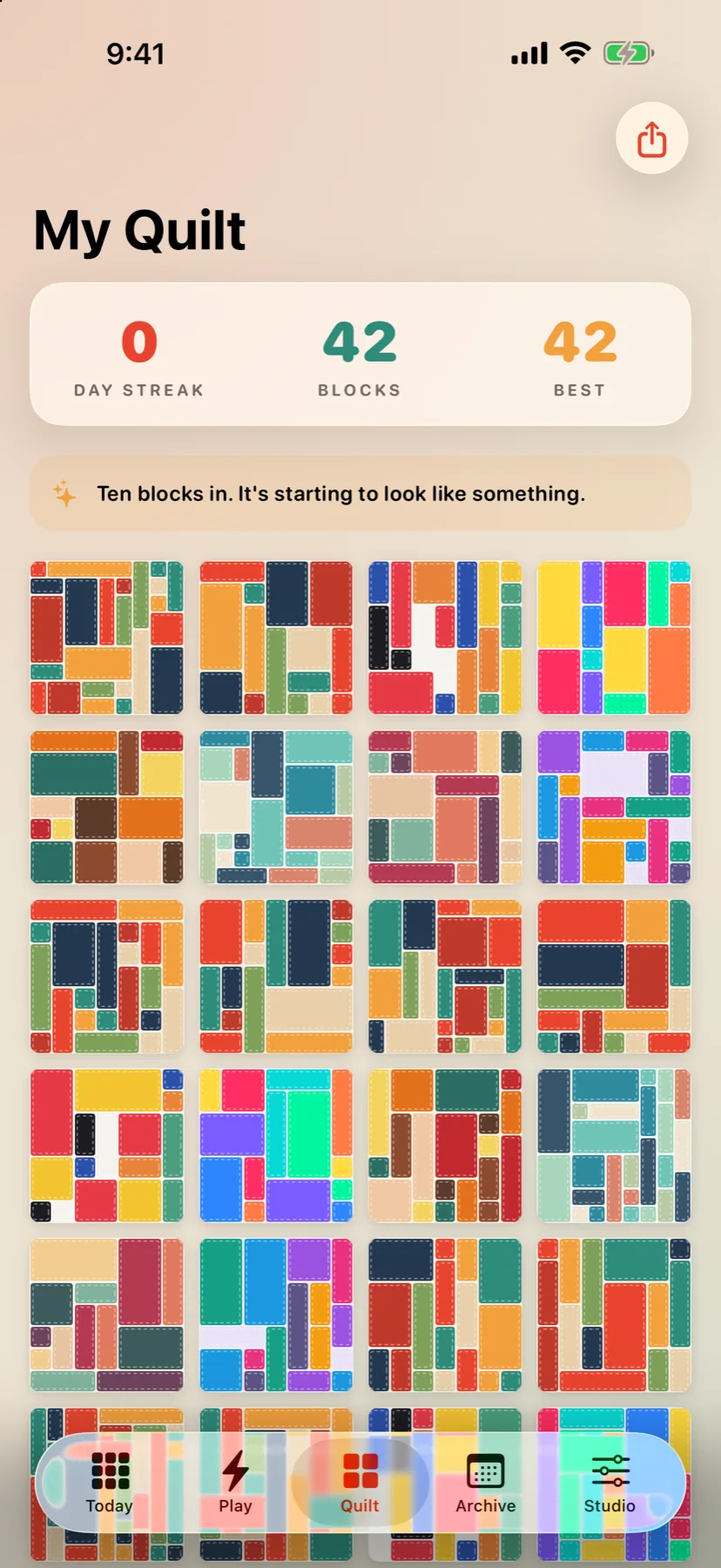
A small logic board has an unusually clear shape. It presents a limited set of rules, offers visible progress, and can reach a natural endpoint without demanding a long story or a public performance. That boundedness may make a puzzle useful when someone wants to direct attention somewhere specific for a few minutes. The player can compare a clue, test a rectangle, follow a loop, or notice a pattern; the activity is concrete even when the day has felt diffuse. Coverlet’s completed quilt block can reinforce an ending, but the ending should remain optional rather than a reason to continue. The design implication is modest: keep instructions clear, make mistakes recoverable, avoid unnecessary pressure, and let the player stop without losing dignity. These features may support a transition experience, but they do not establish a therapeutic mechanism. The benefit, if any, is better described as a possible fit between a bounded activity and a person’s immediate need for a change of attention.
A five-minute Coverlet recovery ritual
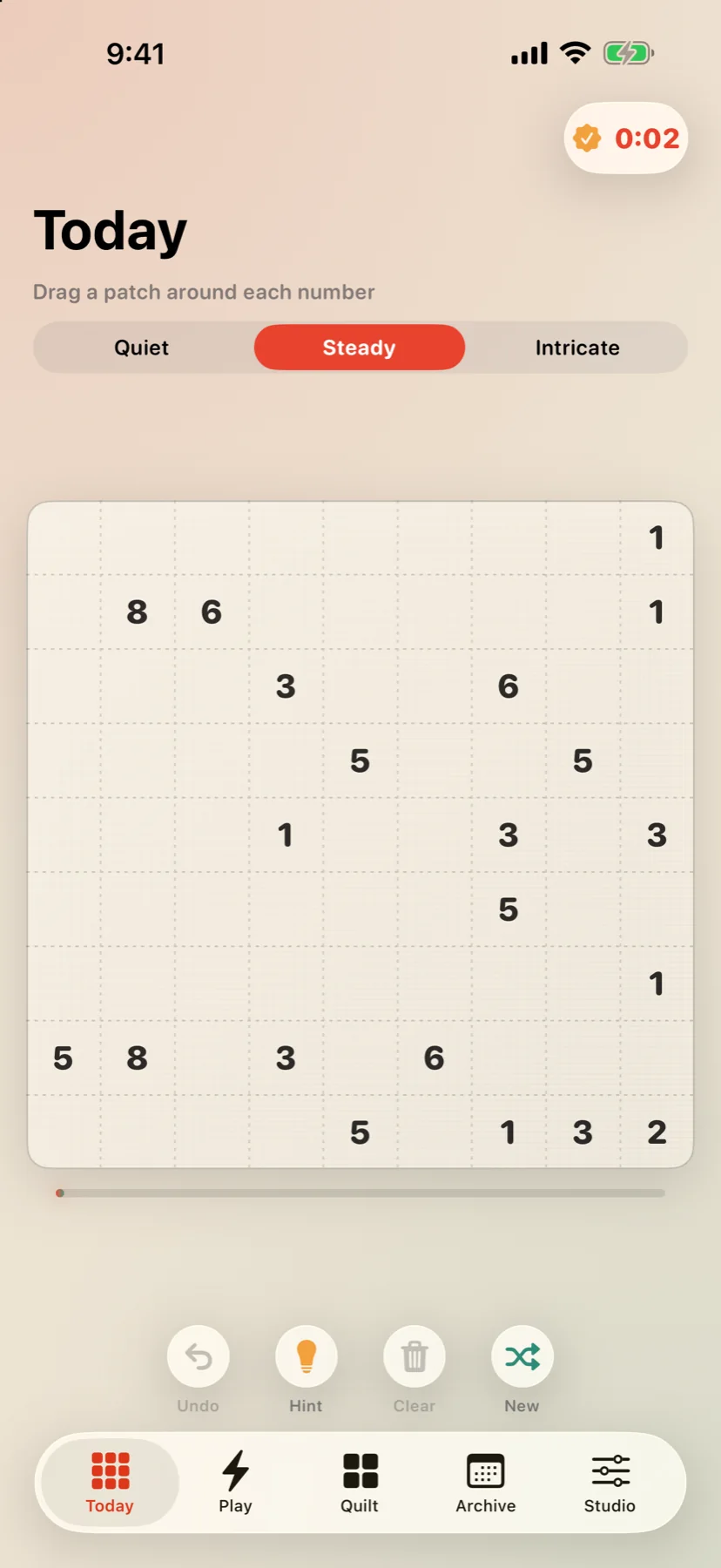
Try a short ritual that makes the choice deliberate. First, put the phone down for one slow breath and notice whether you want stimulation, quiet, or no screen at all. If a puzzle still sounds appealing, choose a technique and difficulty that match your remaining energy rather than the hardest available board. Set a soft boundary: one section, one board, or five minutes. During the solve, focus on one observable question such as “Which clue has the fewest legal shapes?” or “Where must this loop continue?” When the board is complete, or when irritation starts to rise, stop. Let the finished block be the endpoint. Do not turn the ritual into a streak, a test of discipline, or a way to avoid every difficult feeling. If you are using the app between work and family time, make the transition explicit by closing it before the next obligation begins. The practical goal is not maximum play; it is a small, chosen interval with a clear exit.
Notice the fit and change course
Your response after a session is more informative than a generic promise about games. Ask whether you feel more settled, equally tired, mentally sharper, or more activated. Johannes, Vuorre, and Przybylski (2021) found a positive correlation between video game play and well-being in a large-scale study, but correlation is not proof that play caused the outcome, and an average association cannot predict every session. If a puzzle leaves you calmer, keep it as one option. If it makes you chase completion, ignore fatigue, compare yourself with others, or postpone necessary care, shorten it or stop. Recovery is plural: walking, music, food, sleep, a supportive conversation, and doing nothing may fit better on another day. Coverlet should help a player make an informed choice, not imply that the app is the correct answer to stress. The safest guidance is therefore practical and reversible: try a bounded session, observe the result, respect the signal, and change the activity when the fit is poor.
Keep the boundary visible
A useful recovery experiment has a beginning, an endpoint, and a way to learn from the result. Before a session, decide what you are trying to change: work context, rumination, boredom, or simply the shape of the next five minutes. Afterward, name what happened without forcing a positive interpretation. If the board helped, you can repeat it; if it did not, choose a different activity. Do not use a puzzle to postpone urgent decisions, ignore physical symptoms, or stay awake past the rest your body needs. A low-pressure design is valuable because it gives the player permission to leave. In practical terms, that means no shame for stopping, no requirement to complete a streak, and no claim that the app is a treatment. The research supports curiosity about when play fits recovery, not certainty that it will. Treat the ritual as a small, reversible choice and keep other forms of support available.
If you want an even quieter approach, read how to build a daily logic puzzle routine and why privacy and pacing matter.
References
APA 7 references for the research discussed in this article. Last checked 29 Aug 2026.
- Reinecke, L. (2009). Games and recovery: The use of video and computer games to recuperate from stress and strain. Journal of Media Psychology, 21(3), 126–142. Source
- Villani, D., Carissoli, C., Triberti, S., Marchetti, A., Gilli, G., & Riva, G. (2018). Videogames for emotion regulation: A systematic review. Games for Health Journal, 7(2), 85–99. Source
- Pallavicini, F., Ferrari, A., & Mantovani, F. (2018). Video games for well-being: A systematic review on the application of computer games for cognitive and emotional training in the adult population. Frontiers in Psychology, 9, 2127. Source
- Johannes, N., Vuorre, M., & Przybylski, A. K. (2021). Video game play is positively correlated with well-being. Royal Society Open Science, 8(2), 202049. Source
Keep reading