 Coverlet
Self-determination and puzzle games: why choice matters
A good puzzle does not need to pull harder. It gives you a reason to choose the next move for yourself.
By Mourad Hamdi · Last reviewed
The three needs behind self-directed play
Self-determination theory proposes that people tend to function better when environments support autonomy, competence, and relatedness (Ryan & Deci, 2000). A puzzle can support autonomy by making participation voluntary, competence by making progress understandable, and relatedness through conversation or shared meaning—even when the board itself is a private, solo activity.
Autonomy is not the same as more settings
Choice becomes meaningful when it changes how an activity fits a person. Choosing a quieter board, a different technique, or whether to play today can matter more than a screen full of toggles. Game-engagement research connects need satisfaction with enjoyment and the quality of motivation, not simply with longer sessions (Ryan et al., 2006; Przybylski et al., 2010).
Competence needs a challenge that is just right
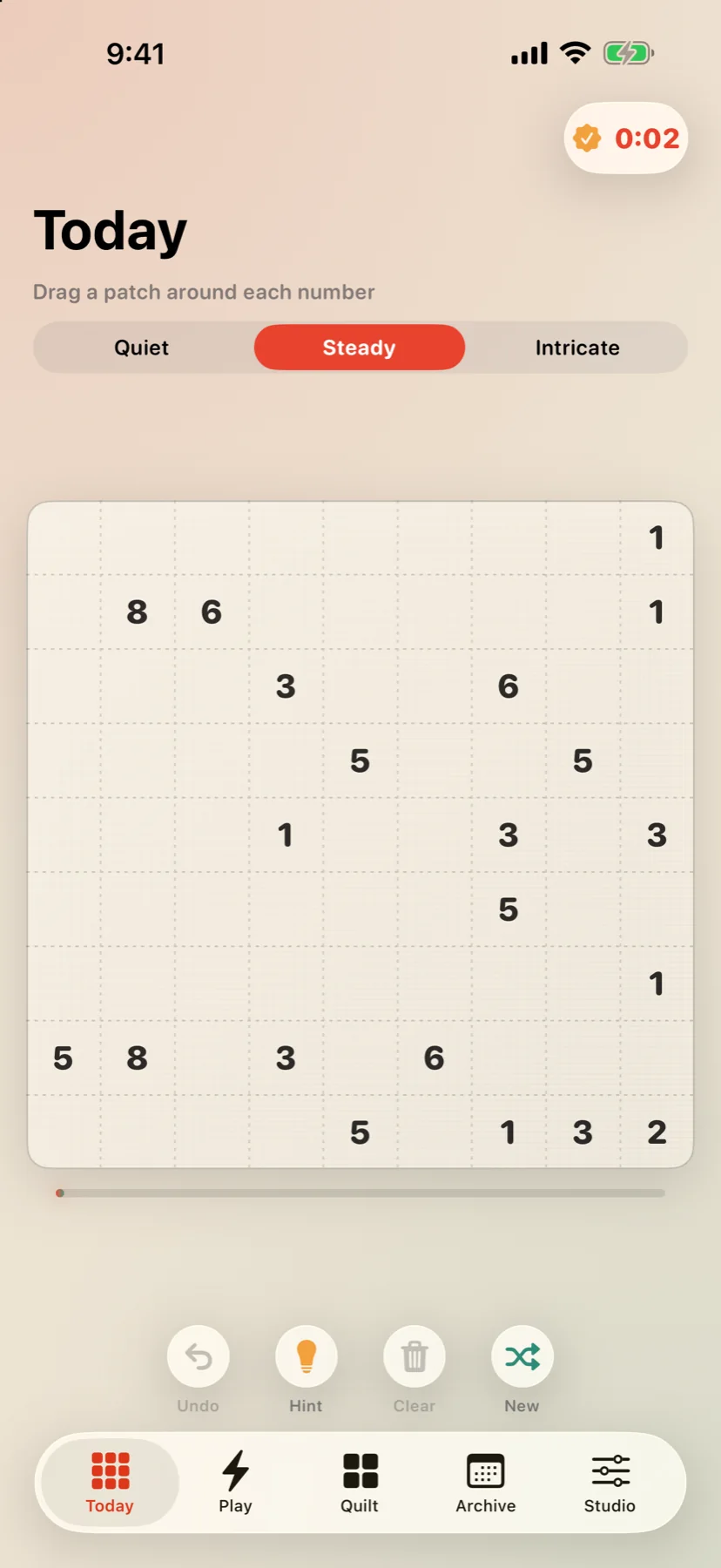
If every board is trivial, there is no discovery. If every board feels opaque, the player cannot tell what to learn. Coverlet's Quiet, Steady, Intricate, and Sprint modes offer different time and intensity shapes so a person can choose a challenge that fits the moment. That is a design hypothesis informed by motivation research, not a clinical intervention.
Relatedness can be private
Relatedness does not require a public leaderboard. A quilt can become a conversation starter, a record shared with someone close, or a small reminder that time was spent intentionally. The important point is that the player decides what the finished work means and whether anyone else sees it.
A low-pressure checklist for game makers
Ask whether the player can understand the goal, make a meaningful choice, recover from a mistake, and stop without punishment. Avoid turning every need into a monetized prompt. A daily puzzle can invite return through clarity and care rather than anxiety. That is the kind of motivation Coverlet aims to cultivate.
The three needs behind self-directed play
Self-determination theory proposes that people tend to function better when environments support autonomy, competence, and relatedness (Ryan & Deci, 2000). These are not three buttons a game can press to guarantee motivation. They are useful lenses for asking what kind of invitation an activity offers. Autonomy concerns the feeling that participation and action are meaningfully chosen. Competence concerns understanding what effective progress looks like. Relatedness concerns connection and significance, whether that comes from playing with others, sharing an experience, or caring about what an activity means. A solo logic puzzle can touch all three without pretending to satisfy them automatically. The player can choose whether to open the board, learn a rule, and decide what the finished solve represents. The design task is to make those choices real rather than dressing compulsion in friendly language. A daily puzzle should be allowed to remain a small invitation, not a test of loyalty.
Autonomy is more than a screen of settings
More options do not always create more autonomy. Choice is meaningful when it changes how an activity fits the person and the moment. Choosing a quieter board, a different technique, a shorter session, or whether to play at all can matter more than a long list of cosmetic toggles. Game-engagement research links need satisfaction with enjoyment and the quality of motivation, not simply with longer sessions (Ryan et al., 2006; Przybylski et al., 2010). That distinction is important for daily puzzle design. A reminder can be useful if the player asked for it, but pressure, streak loss, and repeated prompts can make the activity feel controlled. Coverlet's private, on-device framing aims to leave room for choice: several puzzle techniques, multiple intensity shapes, and a quilt that records completed work without requiring public comparison. Those are design intentions, not evidence that every player will feel autonomous. The practical test is simple: can a person change the pace, pause, or leave without being made to feel that they failed?
Competence needs a challenge that is just right
A puzzle supports competence when the player can learn the rule, recognise a useful constraint, and see how a move changes the board. If every board is trivial, there is no discovery. If every board is opaque, the player cannot tell what to learn. Difficulty should therefore be adjustable in more than one direction. A small board may reduce visual load; a different technique may change the kind of reasoning; an undo control may make experimentation safer. Feedback should explain rather than merely grade. Coverlet's Quiet, Steady, Intricate, and Sprint modes offer different time and intensity shapes so a person can choose a challenge that fits the moment. That is a design hypothesis informed by motivation research, not a clinical intervention or a guarantee of improved motivation. The useful question for a player is whether the board leaves room for agency: can you understand why a placement works, recover from a wrong turn, and finish with a sense that the reasoning was yours? Competence grows from that visible path, not from a number attached to the result.
Relatedness can be private
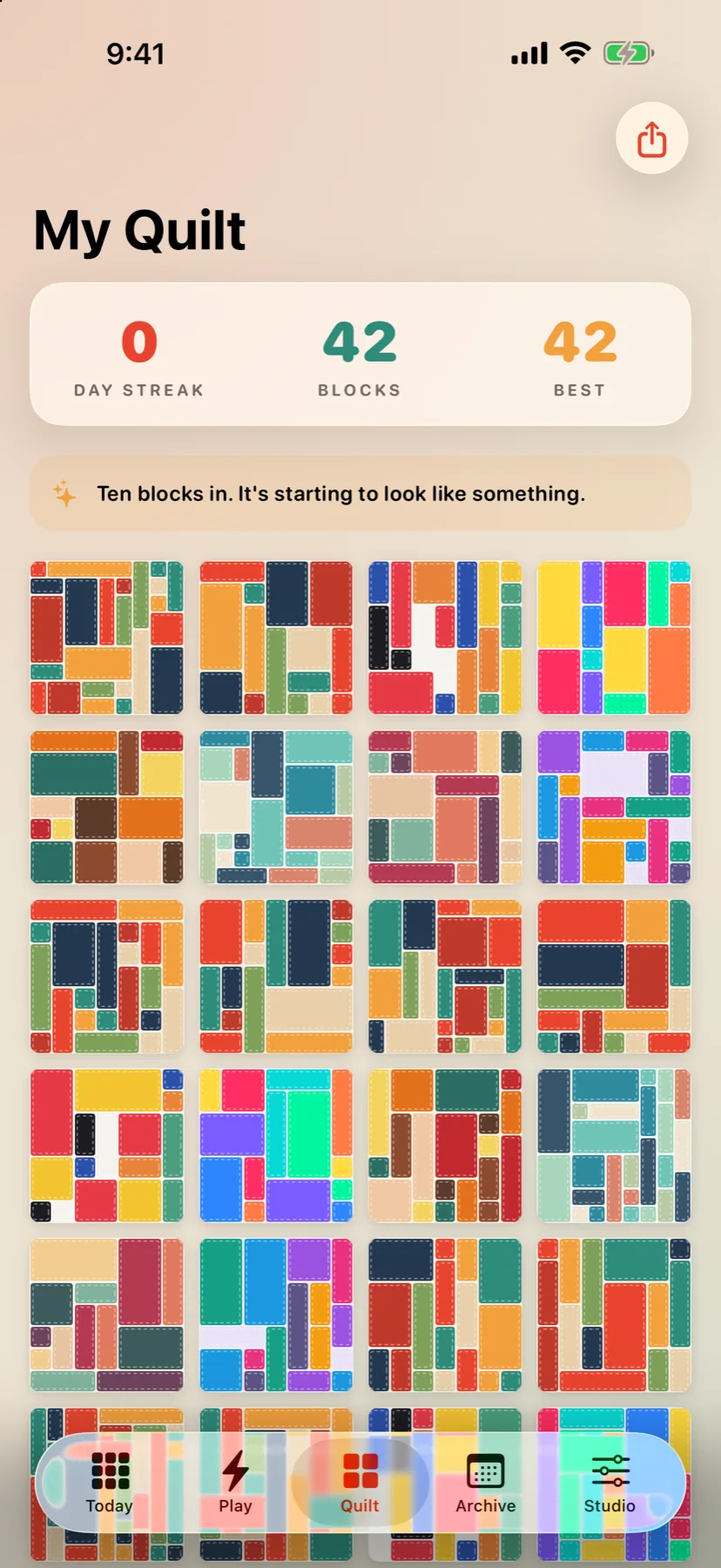
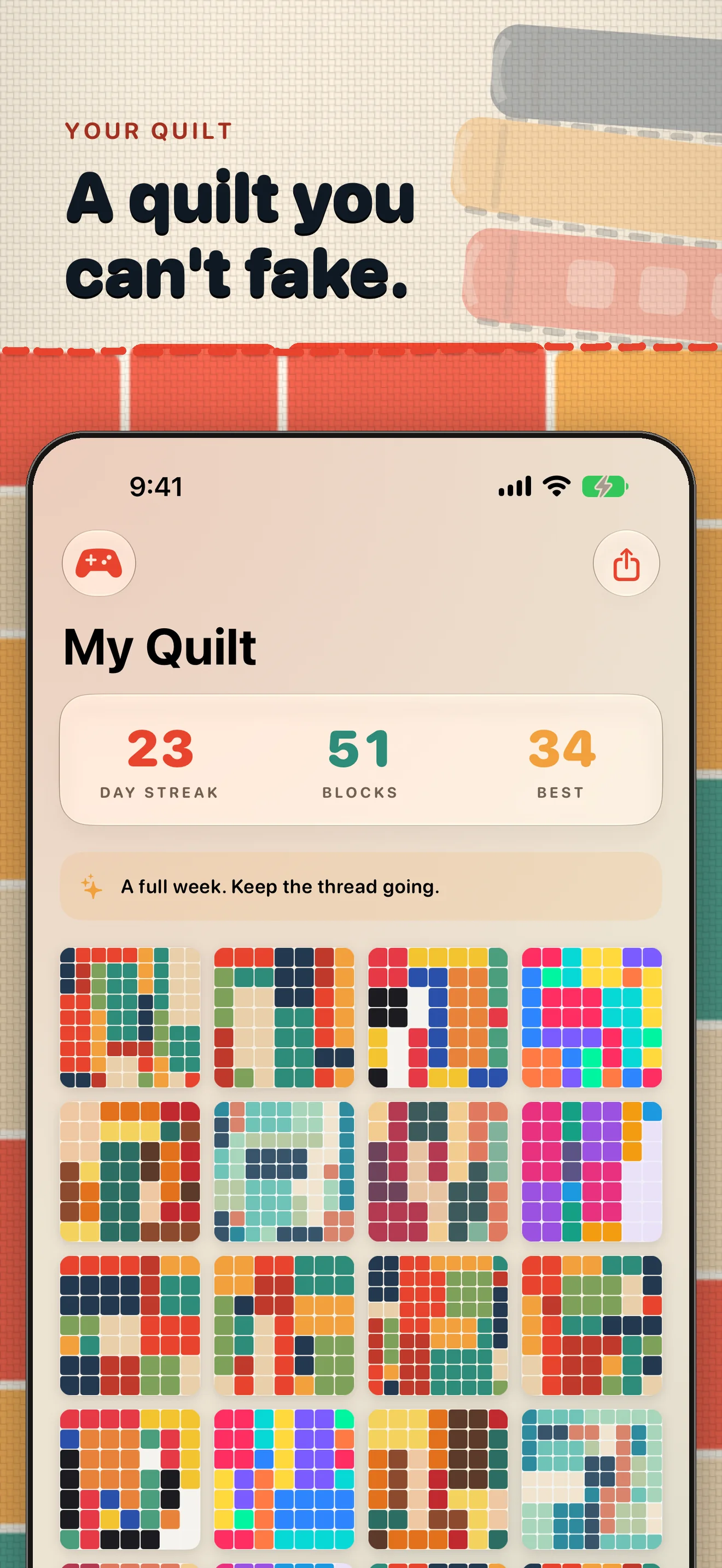
Relatedness does not require a public leaderboard or a multiplayer lobby. A quilt can become a conversation starter, a record shared with someone close, or a small reminder that time was spent intentionally. A person might show a finished block to a friend, compare solving approaches, or simply recognise a pattern that belongs to a particular season of life. The important point is that the player decides what the finished work means and whether anyone else sees it. Reviews of game research describe social and emotional outcomes as dependent on context, design, and use rather than guaranteed by the presence of a game label (Granic et al., 2014). That caution leaves room for quiet connection. A private puzzle can support relatedness through memory, conversation, or shared appreciation without turning attention into a public performance. Coverlet's quilt is useful in that sense because it stores a record of the player's choices without requiring an audience. The archive is personal first; sharing, if it happens, remains optional.
A low-pressure checklist for game makers and players
Ask four questions of any puzzle game. Can the player understand the goal without being rushed? Can they make a meaningful choice about pace, technique, or stopping? Can the interface make progress legible and mistakes recoverable? Can the player decide whether the finished work stays private or becomes part of a conversation? These questions turn self-determination theory into a design review without pretending that a checklist measures well-being. Avoid converting every need into a monetised prompt. Autonomy is weakened when a choice is technically available but repeatedly nudged toward one profitable answer. Competence is weakened when difficulty is opaque or feedback is purely punitive. Relatedness is weakened when comparison is the only social language. A daily puzzle can invite return through clarity and care rather than anxiety. That is the kind of motivation Coverlet aims to cultivate: a person opens the board because the next small problem looks worth choosing, not because the product has made absence feel like a loss. The checklist can also be used during a real session. Notice whether you understand the instruction, whether the current board is demanding but readable, and whether the final action feels like a choice. If any answer is no, the remedy may be a smaller board, a different technique, a pause, or a clearer explanation rather than more persistence. A product-led article can make that permission visible: the app is useful when it supports the player's intention, and less useful when it quietly replaces it.
See the practical result in our iPad puzzle checklist and our notes on quieter game design.
References
APA 7 references for the research discussed in this article. Last checked 29 Aug 2026.
- Ryan, R. M., & Deci, E. L. (2000). Self-determination theory and the facilitation of intrinsic motivation, social development, and well-being. American Psychologist, 55(1), 68–78. Source
- Ryan, R. M., Rigby, C. S., & Przybylski, A. (2006). The motivational pull of video games: A self-determination theory approach. Motivation and Emotion, 30(4), 344–360. Source
- Przybylski, A. K., Rigby, C. S., & Ryan, R. M. (2010). A motivational model of video game engagement. Review of General Psychology, 14(2), 154–166. Source
- Granic, I., Lobel, A., & Engels, R. C. M. E. (2014). The benefits of playing video games. American Psychologist, 69(1), 66–78. Source
Keep reading