 Coverlet
Shikaku vs Sudoku vs Nonogram: how the puzzles differ
All three reward careful deduction, but the information on the board and the shape of a finished answer are completely different.
By Mourad Hamdi · Last reviewed
The short comparison
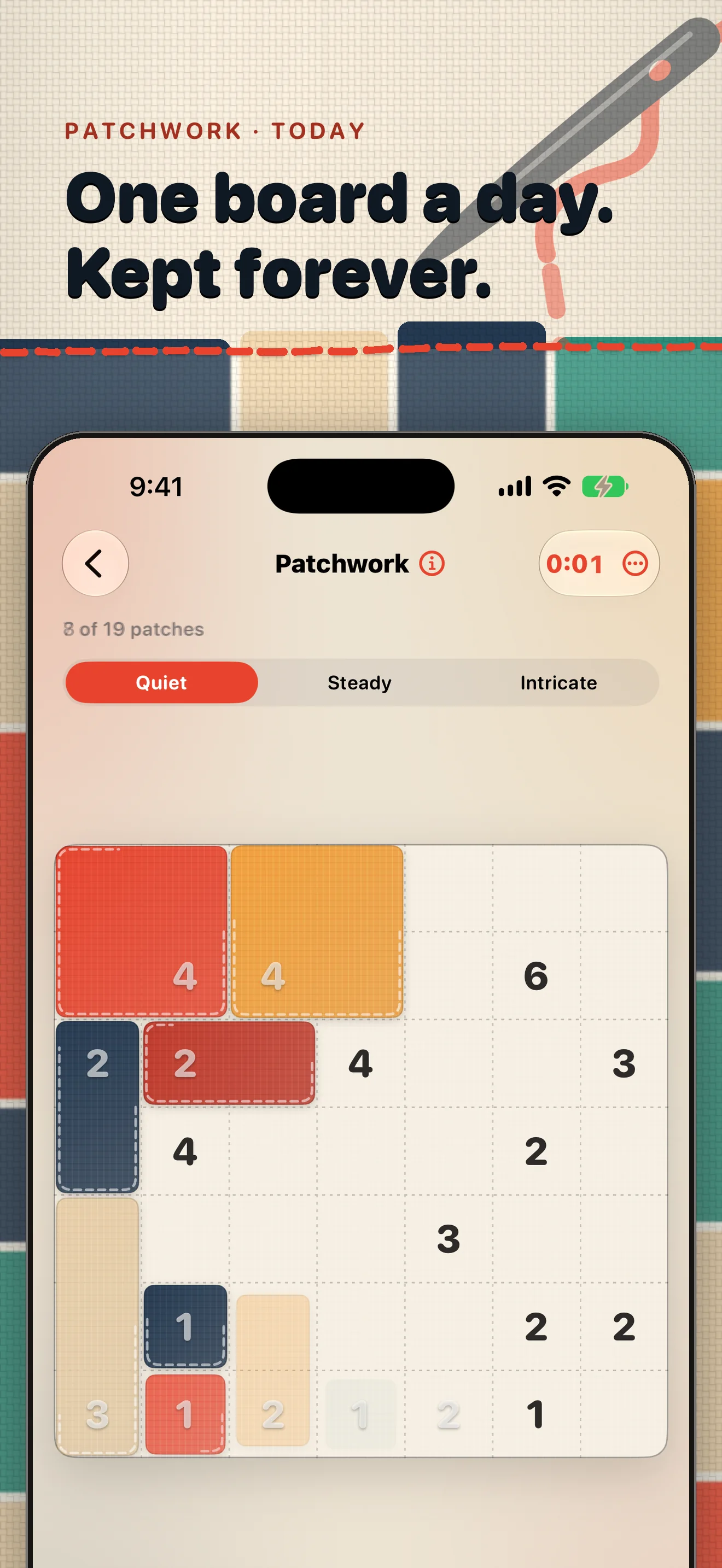
Shikaku, Sudoku, and Nonograms are all constraint puzzles, but they ask you to translate different kinds of clues. Shikaku partitions a grid into rectangles whose areas match numbered clues. Sudoku fills a 9x9 grid so each row, column, and 3x3 box contains the digits 1 through 9 once. A Nonogram uses row and column run clues to reveal filled cells, with separate runs divided by at least one empty cell. In Shikaku, the answer is a set of regions. In Sudoku, it is a complete number placement. In a Nonogram, it is a pattern of filled and empty cells that may form a picture. These distinctions matter because the same word—number—does not mean the same operation. A Shikaku 6 is an area requirement; a Sudoku 6 is a candidate digit; a Nonogram 6 is a run length. The Shikaku guide is the best place to start if the rectangle vocabulary is new.
How to translate the clues
Imagine three small examples. In Shikaku, a clue marked 6 asks you to consider rectangle dimensions such as 1x6 or 2x3, then remove the shapes that cross the board edge or conflict with another clue. In Sudoku, a 6 in a row does not describe six cells; it describes one digit that may or may not be placed in a particular empty cell after row, column, and box candidates are compared. In a Nonogram, a clue sequence such as 3, 1 describes a run of three filled cells and a later run of one, with at least one blank between them. The first task in each puzzle is therefore interpretation. If you use a Sudoku habit on Shikaku, you may look for a digit that can go in one cell when the real question is which rectangle can own an area. If you use a Shikaku habit on a Nonogram, you may draw a block without accounting for run order. Name the clue's job before you make the move.
How the deductions move
Shikaku is spatial and boundary-driven. You draw a candidate rectangle and immediately see which cells and neighbouring clues it affects. Corners and edges are powerful because they reduce the directions in which a rectangle can extend. Sudoku is relational: placing a digit removes that digit from its row, column, and box, while candidate notes may create a hidden single or a useful pair. Nonograms are sequential and overlap-driven: you compare the possible positions of each run, fill cells that every position shares, and mark blanks that no position can use. A concrete Shikaku move might be a corner 3 forced into a one-by-three strip. A Sudoku move might be a digit that has only one legal cell in a box. A Nonogram move might be a cell filled in every placement of a long run. All three reward certainty, but certainty comes from different geometry.
Pace and finished shape
The formats also feel different because their boards reveal progress differently. Shikaku often changes in visible regions: one rectangle can settle a large group of cells at once. Sudoku may progress through a chain of small placements, with the value of a move appearing across several units. Nonograms reveal a pattern gradually, and the emerging image can make later run placements easier to see. None of these rhythms is automatically better. Choose based on the kind of attention you want to use. If you enjoy area, edges, and clean partitions, Shikaku is a natural fit. If you prefer candidate lists and repeated row-column-box relationships, Sudoku may feel more familiar. If you like ordered runs and a picture emerging from constraints, try a Nonogram. Coverlet's eight-technique guide offers a related comparison inside the app's own modes.
Which puzzle should you try?
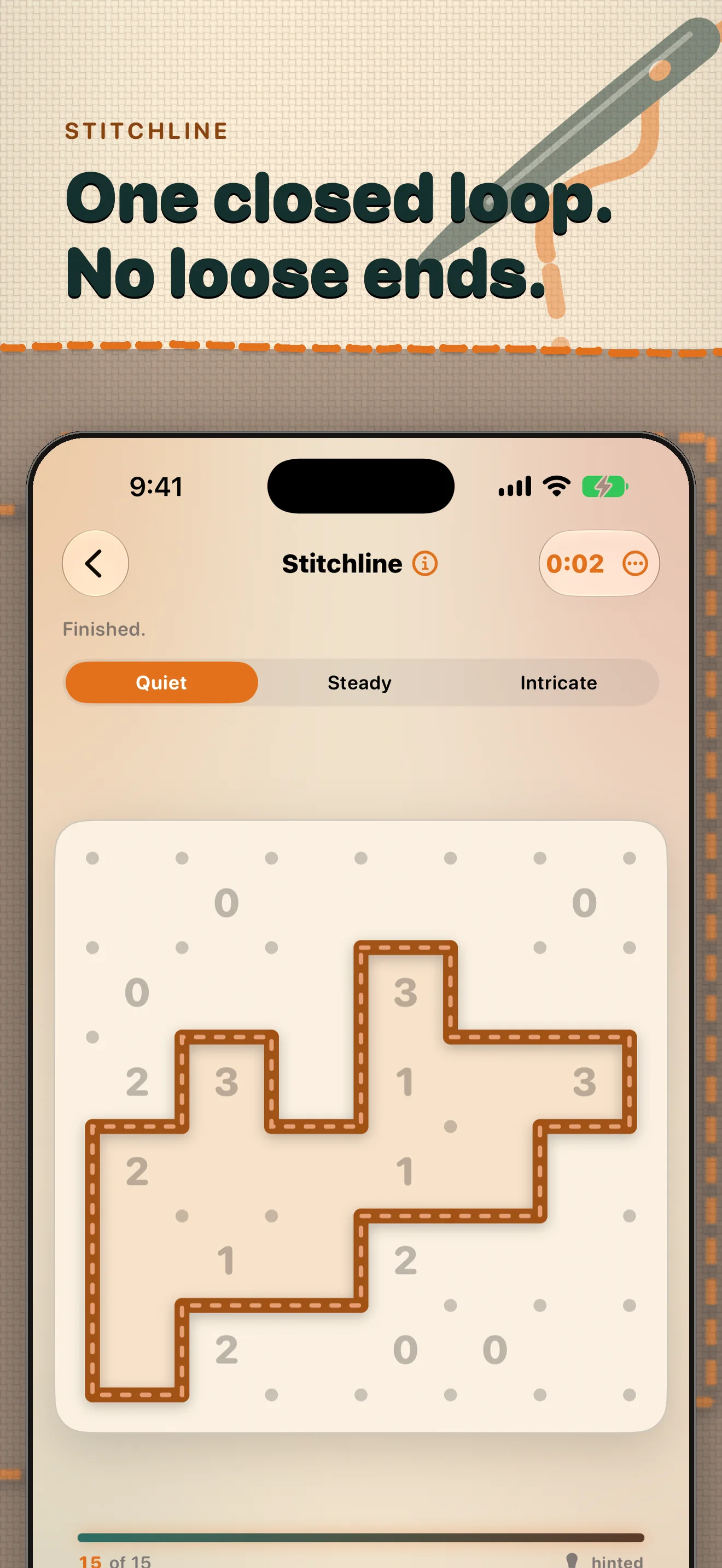
Start with Shikaku if you want a rule that can be explained quickly and tested with visible shapes. Read the beginner solving method, then try the rectangle-area logic in Coverlet Patchwork. Choose Sudoku if the pleasure of the solve comes from maintaining candidate digits across a fixed set of units. Choose a Nonogram if run lengths, spacing, and an emerging image are the appeal. You can also use the comparison as a way to choose a Coverlet technique: Patchwork emphasizes rectangles and area, while Appliqué, Piecing, Stitchline, and Rosette change the visual language and deduction style. The important distinction is not the marketing label but the question the next move answers. Ask whether you are assigning an area, a digit, a run, or a shape. Once that question is clear, the board becomes easier to read and the right puzzle becomes easier to choose.
Use the difference to choose
A comparison is most useful when it changes what you do next. If you want a board where one placement claims a visible region, Shikaku may be the right experiment. If you prefer a dense web of candidates that cross rows, columns, and boxes, Sudoku gives you that structure. If you enjoy testing the overlap of ordered runs and watching a pattern emerge, a Nonogram may hold your attention longer. You can also change the size of the question. Try one example of each format and describe the next move in a sentence: I am choosing an area, I am eliminating a digit, or I am fixing a run position. If the sentence feels natural, you have probably found the puzzle language that suits you. Coverlet's game shelf offers a related experiment inside one app: Patchwork for rectangles, Appliqué for connected regions, Piecing for tile relationships, Stitchline for a loop, and Rosette for patterns. The aim is not to rank the formats. It is to find the constraint that makes you curious about the next move.
There is no single best format. The right choice is the one whose constraints make you curious about the next move.
References
APA 7 references for the research discussed in this article. Last checked 29 Aug 2026.
Keep reading