 Coverlet
What New Games Teach Us About Reasoning
Unfamiliar rules do not require perfect calculation. They invite us to form a goal, try a small possibility, and update what we think.
By Mourad Hamdi · Last reviewed
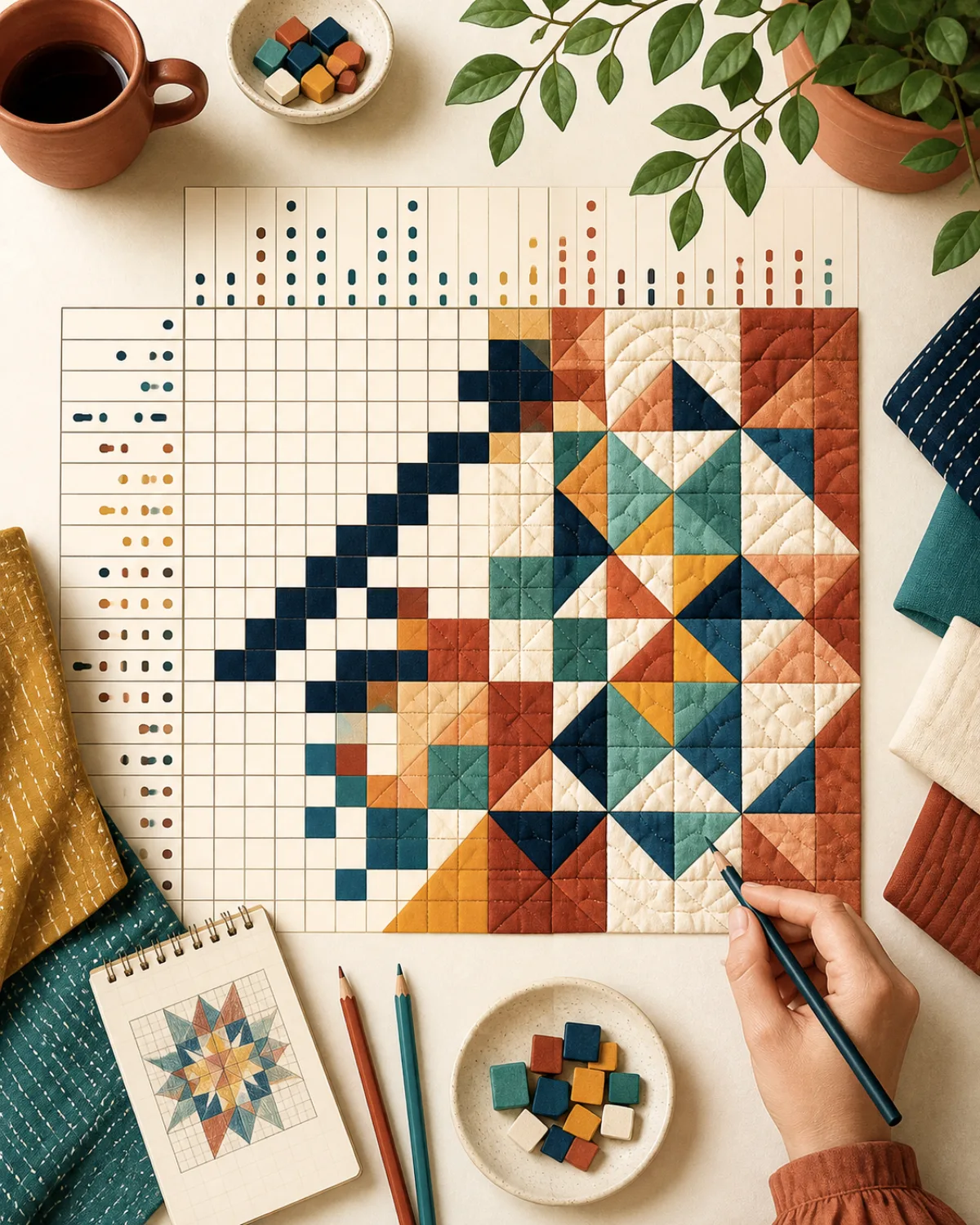
New games are small laboratories for reasoning
Most game research begins with a familiar title or a trained player. The 2026 Nature study by Collins and colleagues asks a different question: what do people do when they meet a game they have not played before? Across large behavioural studies with more than 1,000 participants and 121 two-player strategic board games, the researchers examined how novices evaluated games, chose actions on a first play, and predicted what other first-time players might do. The games shared some grid-based ingredients with familiar board games, but their rules and dynamics varied.
That setup matters because everyday reasoning is full of first encounters. We open an unfamiliar interface, interpret a new workplace process, or decide whether a choice is worth the effort before we understand every consequence. The study does not say that people solve novel situations perfectly. It suggests something more practical: people are often systematic before they are expert. They can use a compact understanding of goals and opposition to make a reasonable first move, rather than waiting for a complete theory of the system.
Why fast, flat simulation matters
The Nature authors describe this pattern with the “Intuitive Gamer,” a computational model built around fast and flat, or depth-limited, goal-directed probabilistic simulation. In plain language, the model does not search thousands of future positions. It takes a small look ahead, asks whether an action appears to help the player’s goal or hinder an opponent’s, and samples among plausible choices. The model’s simplicity is not the same as randomness. It is a resource-bounded way to be usefully selective.
The distinction is valuable for thinking about puzzles. A player does not need to calculate every possible board completion before making progress. They may notice that a numbered area has only a few feasible rectangles, test one local consequence, and return to the larger board with a better constraint. This is not a claim that Coverlet reproduces the Nature experiment. It is a design analogy: a readable puzzle lets a player spend a small amount of thought on a meaningful possibility instead of demanding exhaustive search from the beginning.
It also gives us a healthier definition of intuition. Intuition is not a magical answer arriving without reasons. In the model, it is guided by goals, limited simulation, and uncertainty. A first impression can be useful and still be revisable. That combination—direction without overconfidence—is one of the most interesting things new games can teach.
The value of trying, imagining, and updating
The earlier MIT account of research on the Virtual Tools game offers a complementary view. In that task, people selected objects and placed them in a two-dimensional scene to achieve goals such as getting a ball into a container. The objects could launch, block, or support other objects, so success required more than recognising a label. Players had to infer what a tool might do in the scene.
The researchers proposed a “Sample, Simulate, Update” model, or SSUP. The three words describe a practical loop. Sample a promising action from the available choices. Simulate what might happen if you take it. Update your expectations when the result, failure, or near miss gives you new information. MIT News reported that the model solved the puzzles in ways and at rates similar to people, while a deep-learning system that had performed well on Atari games struggled to generalise to unfamiliar object-and-physics puzzles. That comparison is about the systems tested in that work; it is not a general ranking of human and machine intelligence.
The loop is familiar to anyone who has solved a good logic puzzle. You mark a candidate, follow its implications, and erase or revise when the board contradicts it. The point is not to celebrate guessing. A disciplined trial is informative because it is connected to a model of the rules, and a mistake is useful when the interface makes its consequence legible. Puzzles can make this reasoning visible: a tentative patch, a forced boundary, or a completed line shows how an idea changes the state of the problem.
What this means for puzzle design
First, explain the goal before asking for speed. Both research stories begin with a structured problem: the player can identify what counts as success, even while the route is uncertain. In a rectangle puzzle, the goal is not “tap until something works.” It is to cover the board with non-overlapping regions whose areas match their clues. In Coverlet Patchwork, that rule creates a small world in which a local observation can matter globally.
Second, make consequences readable. If a player tries a placement, they should be able to see which clue, boundary, or remaining space it affects. This is part of what makes learning a Shikaku-style puzzle different from guessing at a black box. Clear feedback does not give away the answer. It lets the player update an idea instead of merely receiving a verdict.
Third, keep the search proportional to the moment. A puzzle can offer a Quiet board, a more intricate board, or a short Sprint without pretending that one level of intensity suits every player. The Nature model’s resource-bounded reasoning is a reminder that useful thought is often selective. A compact challenge can be satisfying because it asks for one good comparison at a time, not because it overwhelms the player with possibilities.
Finally, let uncertainty remain part of play. A good design can support a provisional mark, an undo, or a way to inspect the rule again. These features are not shortcuts around reasoning. They create room for reasoning to happen. The goal is to help the player build and revise a small model of the system.
What the evidence does not say
Neither source is a product trial for Coverlet. The Nature study investigated how people reasoned about a set of novel two-player strategic games, and the Virtual Tools work examined physical reasoning in a particular computer task. From those studies, we cannot conclude that playing any puzzle app improves general intelligence, creativity, memory, school performance, or long-term health. We also cannot assume that a player who becomes better at one puzzle will transfer that ability to an unrelated task.
Even within games, mechanics matter. A board that asks for spatial partitioning is not the same as a game that asks for rapid visual reactions, social prediction, or physical tool selection. The responsible claim is narrower: game rules can provide compact environments in which people form goals, explore consequences, and revise beliefs. Whether practice transfers beyond the game is an empirical question requiring a study of the specific design, players, comparison, and outcome.
That caution does not make the findings less interesting. It makes them more useful. We do not need to market every puzzle as brain training to notice that its rules shape what kind of thinking it invites. A game can be worth playing because the reasoning inside it is clear, finite, and enjoyable.
A better invitation to reason
New games teach us that reasoning is not only deep calculation. It can be a quick, structured conversation between a goal and a possibility: What might this move do? Which consequence would matter? What did the last attempt teach me? The Nature paper shows how novices can make sense of unfamiliar strategic systems with fast, shallow, goal-directed simulation. The MIT work highlights a related loop of sampling, simulating, and updating in flexible tool use.
For a puzzle maker, the lesson is a set of responsibilities. State the rule. Show the consequence. Leave room for a first hypothesis. Let the player revise. And be honest about the boundary between practising a game’s reasoning and proving a broad cognitive benefit. Coverlet’s daily boards are designed around that smaller promise: a few minutes in which a pattern becomes clearer because you paid attention to its constraints.
Try the Patchwork board, read our solving notes, or download Coverlet from the App Store. A new game does not have to make you an expert. It only has to give your next thoughtful move somewhere to begin.
References
APA 7 references for the research discussed in this article. Last checked 15 Aug 2026.
- Collins, K. M., Zhang, C. E., Wong, L., Barba da Costa, M., Todd, G., Weller, A., Cheyette, S. J., Griffiths, T. L., & Tenenbaum, J. B. (2026). People use fast and flat simulation to reason about new games. Nature, 655, 598–607. Official article
- MIT News. (2020, November 24). How humans use objects in novel ways to solve problems. Massachusetts Institute of Technology. Official article